Tag: Web Development Trends

  • Implementing Web Development Trends: Why Partnering With Experts Like Ravens Digital Is the Smartest Move

    Implementing Web Development Trends: Why Partnering With Experts Like Ravens Digital Is the Smartest Move

    Smart Web Development Trends Start with Ravens Digital

    By the time you’ve landed here, you already understand that web development trends matter. You know that mobile-first design, AI integration, fast-loading pages, and modern frameworks aren’t just buzzwords—they directly influence how customers engage with your business online.

    The question is no longer “Should I follow web development trends?” The real question at this stage is:

    👉 “How do I implement them effectively, without wasting time, money, or opportunities?”

    That’s where decision-making gets serious. At this point, you’re likely weighing options:

    • Should you try to implement these trends in-house?
    • Should you hire freelancers?
    • Or is it better to partner with a specialized web development agency like Ravens Digital?

    This article will help you make that decision with confidence. We’ll explore the real-world challenges of implementation, the risks of DIY approaches, the advantages of working with experts, and how Ravens Digital can help you adopt web development trends in a way that drives measurable business results.

    The Reality Check: Why Implementing Web Development Trends Is Harder Than It Looks

    On the surface, implementing new web trends sounds simple. You’ve read about progressive web apps (PWAs), responsive design, or AI-driven personalization. You may even have developers on staff who can code. A significant chasm separates theoretical knowledge from its flawless practical application.

    Here are the most common challenges businesses face when attempting trend implementation on their own:

    1. Technical Complexity

    Many modern trends—like serverless architecture, AI chatbots, or single-page applications—require advanced coding knowledge and infrastructure. Without specialized skills, mistakes can cause performance issues or security vulnerabilities.

    2. Costly Missteps

    DIY attempts often lead to rework. For example, launching a mobile-first site without proper optimization might hurt SEO rankings. The cost of post-facto correction frequently exceeds the initial investment of executing a task accurately from the outset.

    3. Fragmented Strategy

    Businesses often adopt trends piecemeal—adding features without considering how they align with larger goals. This results in fragmented customer journeys and squandered resources.

    4. Resource Strain

    Your internal team already has full plates. Redirecting their focus towards experimenting with new web trends can hinder productivity and potentially result in burnout.

    5. Constant Change

    Web development trends evolve rapidly. What works today might not be relevant in two years. Staying updated requires ongoing monitoring and adaptation.

    Team of web development experts working on modern website trends with Ravens Digital

    DIY vs. Professional Implementation: A Clear Comparison

    When deciding how to move forward, many businesses weigh DIY vs. professional solutions. Let’s break it down:

    Factor

    DIY / In-House Approach

    Partnering With Ravens Digital

    Cost

    Appears cheaper upfront but leads to costly fixes later

    Transparent pricing, scalable solutions, ROI-focused

    Expertise

    Limited to your team’s current skill set

    Access to specialists across frameworks, UX, SEO, security, AI

    Speed

    Slower due to trial and error

    Faster implementation with proven processes

    Scalability

    Hard to adapt as needs grow

    Future-proof strategies designed to scale

    Quality Assurance

    Risk of bugs, missed optimizations

    Rigorous testing, cross-device QA, compliance checks

    Strategic Alignment

    Often tactical, not strategic

    Aligned with business objectives and customer journeys

    Conclusion: While DIY may seem tempting, serious businesses recognize that professional implementation ensures long-term success.

    What Implementing Web Development Trends Looks Like With Ravens Digital

    At Ravens Digital, we specialize in helping businesses not just “follow” trends, but strategically implement them in ways that deliver growth, performance, and customer satisfaction.

    Here’s how we approach implementation:

    1. Comprehensive Website Audit & Consultation

    Before implementing new features, we evaluate your existing site with a full technical audit.

    This baseline allows us to identify exactly which trends will benefit your business most, ensuring you’re not wasting money chasing fads.

    2. Strategic Planning Aligned With Your Goals

    We don’t implement trends for the sake of “looking modern.” We align every change with your business goals:

    • Do you want more conversions?
    • Higher rankings?
    • Stronger customer loyalty?

    Each decision is ROI-driven. For example, if your goal is eCommerce sales, we may prioritize AI personalization and PWA development. If your focus is local visibility, we emphasize mobile-first design and voice search optimization.

    3. Implementation by Experts

    From coding SPAs with React to integrating AI-powered chatbots, our team handles the heavy lifting. Unlike DIY, there’s no guesswork—just proven processes delivered by seasoned developers and designers.

    4. Rigorous Testing & Optimization

    Every implementation goes through:

    • Cross-device and cross-browser testing
    • Speed optimization
    • Accessibility compliance (WCAG standards)
    • Security hardening

    We ensure your site not only looks good but functions flawlessly under real-world conditions.

    5. Ongoing Monitoring & Updates

    Web development is not “set it and forget it.” Trends evolve, algorithms update, and user expectations shift. We provide ongoing monitoring and optimization to keep your site future-proof.

    Case Studies: How Businesses Benefit From Trend Implementation

    Case Study 1: Local Business Adopts Mobile-First + Voice Search

    A Miami-based law firm partnered with Ravens Digital to modernize its outdated website.

    • Challenge: Their old site wasn’t mobile-friendly, and they missed out on local voice searches.
    • Solution: We implemented a responsive, mobile-first design and optimized content for voice search.
    • Result: Within six months, mobile traffic increased by 70%, and phone inquiries rose by 45%.

    Case Study 2: eCommerce Store Implements AI Personalization + PWA

    An online clothing retailer needed a faster, smarter shopping experience.

    • Challenge: Slow loading times and low conversion rates.
    • Solution: We built a Progressive Web App and integrated AI-driven product recommendations.
    • Result: Page load speed dropped to under 2 seconds, conversions increased by 32%, and repeat customer purchases grew by 18%.

    Case Study 3: Tech Startup Moves to Serverless Architecture

    A SaaS startup required scalability without heavy infrastructure costs.

    • Challenge: Their in-house team couldn’t manage server loads during peak traffic.
    • Solution: We transitioned them to a serverless architecture using AWS Lambda.

    Result: Hosting costs dropped by 40%, and the system handled 3x more traffic seamlessly.

    The Business Impact of Implementing Web Development Trends

    When done strategically, the impact goes beyond aesthetics. Businesses experience:

    • Higher Engagement – Features like microinteractions keep users active.
    • Enhanced SEO – Contemporary techniques are in line with Google’s ranking criteria.
    • Increased Conversions – Faster, mobile-optimized experiences reduce friction.
    • Better Security – Protects customer data and builds trust.
    • Future-Proofing – You won’t fall behind competitors when new technologies roll out.

    How Ravens Digital Makes Implementation Easy

    Unlike many agencies, we don’t just sell cookie-cutter websites. We partner with you to:

    • Identify trends that deliver measurable ROI.
    • Implement solutions tailored to your unique business.
    • Provide ongoing support to adapt as trends evolve.

    You’re not just buying a website—you’re investing in a long-term digital strategy.

    Why Choose Ravens Digital Over Other Options?

    • Local Expertise: Based in Miami, we understand regional markets while delivering global-quality work.
    • Full-Service Approach: From web design to SEO and digital marketing, we integrate everything for maximum impact.
    • Proven Results: Our case studies and client testimonials showcase real ROI, not just promises.
    • Scalable Solutions: Whether you’re a small business or a growing enterprise, we build websites designed to grow with you.

    Getting Started: Your Next Steps

    If you’re ready to implement web development trends the right way, here’s how to get started:

    1. Boosted SEO – Modern strategies align with Google’s ranking standards.
    2. Receive a Website Audit – We’ll analyze where you stand and what improvements matter most.
    3. Get a Customized Roadmap – We’ll outline the exact steps and technologies that will future-proof your site.
    4. Partner for Growth – Let our team handle the implementation while you focus on running your business.

    Final Thoughts

    You already know implementing web development trends is essential—now it’s about how you’ll do it.

    Trying to handle it in-house may feel cheaper, but the risks—delays, errors, lost customers—are real. Partnering with experts like Ravens Digital ensures your website isn’t just trendy—it’s strategically built to drive growth, conversions, and long-term success.

    👉 Are you prepared to update your website and maintain an edge over your rivals? Contact Ravens Digital today to start your transformation.


  • Exploring Web Development Trends: A Comprehensive Guide

    Exploring Web Development Trends: A Comprehensive Guide

    Key Web Development Trends to Follow

    The digital landscape is evolving at an unprecedented pace, and web development stands at the forefront of this transformation. Businesses, entrepreneurs, and developers must stay ahead of the curve to remain competitive and deliver exceptional user experiences. As the backbone of online presence, web development trends shape how brands interact with their audiences, drive conversions, and foster growth. This comprehensive guide delves into the latest web development trends, offering actionable insights and strategies for businesses looking to elevate their digital presence.

    The Evolution of Web Development

    The evolution of web development has significantly progressed from the initial era of static HTML websites. Today, it encompasses a wide array of technologies, frameworks, and methodologies that enable the creation of dynamic, interactive, and responsive websites. The progression of web development is fueled by shifting user demands, advancements in technology, and the necessity for smooth digital interactions.

    Key Milestones in Web Development

    • Static Websites (1990s): Simple HTML pages with minimal interactivity.
    • Dynamic Websites (2000s): Introduction of server-side scripting (PHP, ASP.NET) and databases.
    • Responsive Design (2010s): Mobile-first approach and CSS frameworks like Bootstrap.
    • Modern Web Apps (2020s): Progressive Web Apps (PWAs), Single Page Applications (SPAs), and headless CMS.

    Current Web Development Trends

    Keeping abreast of the newest trends is essential for companies that strive to deliver meaningful digital experiences. Below are the most significant web development trends shaping the industry in 2024 and beyond.

    1. The Rise of Progressive Web Apps: Bridging Websites and Mobile Apps

    PWAs combine the best of web and mobile applications, offering offline capabilities, push notifications, and fast load times. They provide a native app-like experience directly from the browser, making them a popular choice for businesses seeking to enhance user engagement.

    Benefits of PWAs:

    • Improved performance and reliability
    • Enhanced user engagement
    • Lower development and maintenance costs

    2. Seamless Browsing with Single-Page Applications

    SPAs load a single HTML page and dynamically update content as users interact with the app. This approach results in faster load times and a smoother user experience, which is essential for retaining visitors and reducing bounce rates.

    Popular SPA Frameworks:

    • React.js
    • Angular
    • Vue.js

    3. The Shift Toward Serverless Computing

    Serverless computing allows developers to build and run applications without managing server infrastructure. This trend reduces operational complexity, lowers costs, and enables rapid scaling.

    Key Advantages:

    • Automatic scaling
    • Reduced server management
    • Cost efficiency

    4. Smarter Websites with AI and Chatbots

    AI and ML are transforming web development by enabling personalized experiences, chatbots, and advanced analytics. Integrating AI-driven features can help businesses automate tasks, improve customer service, and gain valuable insights.

    Applications of AI in Web Development:

    • Chatbots and virtual assistants
    • Personalized content recommendations

    Predictive analytics

    Comprehensive guide exploring the latest web development trends shaping the digital future

    5. Designing for Voice Search and Conversational Queries

    As smart speakers and voice assistants gain popularity, enhancing websites for voice search is becoming more essential. Voice search requires a focus on natural language processing, conversational keywords, and structured data.

    Voice Search Optimization Strategies:

    • Use of long-tail keywords
    • Implementation of schema markup
    • Creation of FAQ sections

    6. Bringing Websites to Life with Motion and Interactivity

    Motion UI and microinteractions enhance user engagement by providing visual feedback and guiding users through the website. SDelicate animations, seamless transitions, and engaging interactive features enhance the overall user experience, making it feel more immersive.

    Examples of Microinteractions:

    • Button hover effects
    • Loading animations
    • Interactive form validations

    7. Building Flexible Platforms with API-First Development

    API-first development prioritizes the creation of robust APIs before building the frontend or backend. This approach enables seamless integration with third-party services and supports omnichannel experiences.

    Benefits of API-First Development:

    • Faster development cycles
    • Improved scalability
    • Enhanced flexibility

    8. Why Website Security Is More Important Than Ever

    As cyber threats become more sophisticated, prioritizing cybersecurity and data privacy is essential. Implementing secure coding practices, SSL certificates, and GDPR compliance measures protects user data and builds trust.

    Key Security Measures:

    • HTTPS encryption
    • Regular security audits
    • Multi-factor authentication

    Visualizing Web Development Trends

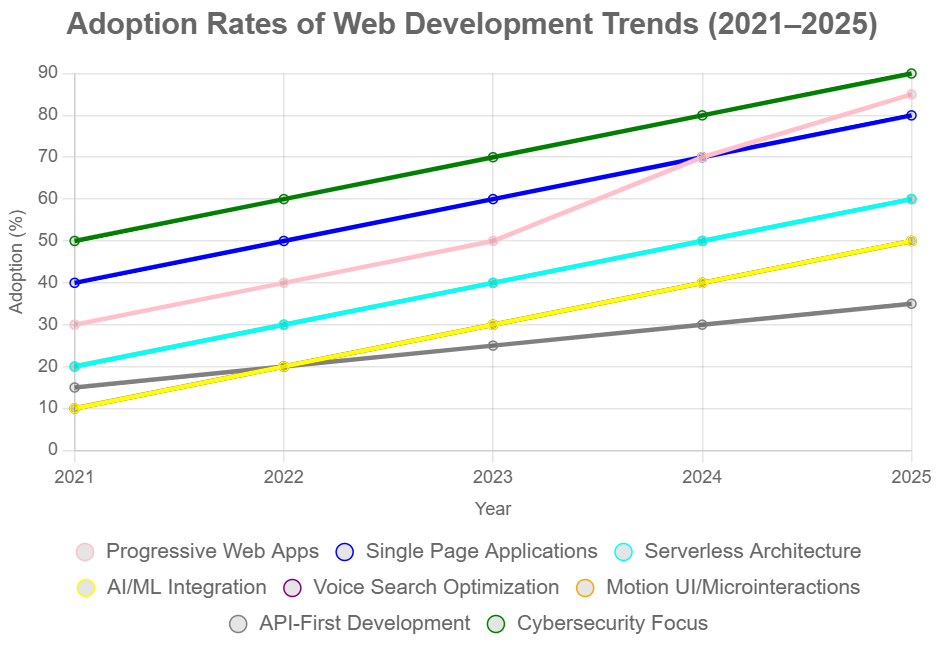
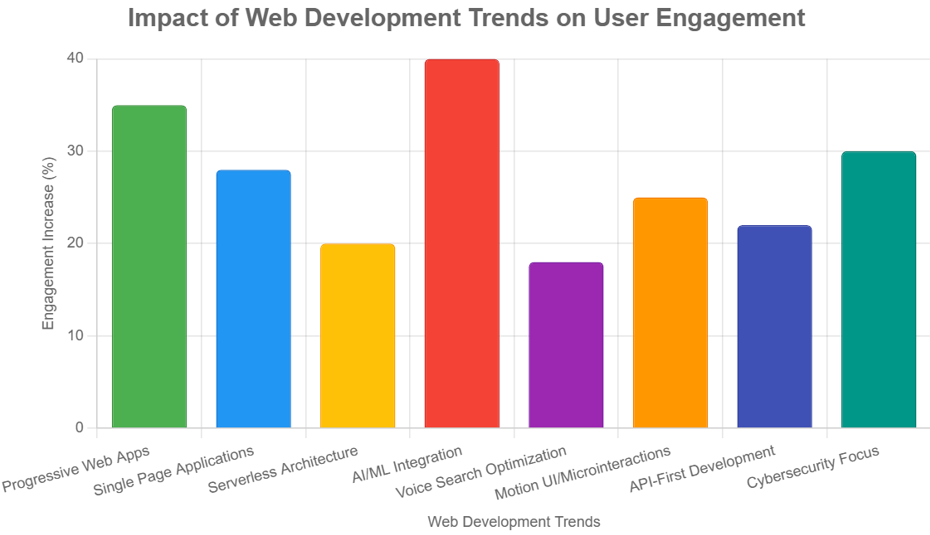
    Below are visual representations of the adoption rates and impact of key web development trends.

    Adoption Rates of Web Development Trends (2021-2025)

    Adoption rates of web development trends 2021–2025

    Impact of Web Development Trends on User Engagement

    Impact of web development trends on user engagement

    Implementing Web Development Trends for Business Growth

    Adopting the latest web development trends can significantly impact business growth, customer satisfaction, and brand reputation. Here are actionable steps for integrating these trends into a digital strategy.

    1. Assess Current Website Performance

    Begin by evaluating the current website’s performance, user experience, and security. Identify areas that require improvement and prioritize updates based on business goals.

    2. Prioritize Mobile-First and Responsive Design

    With the majority of users accessing websites via mobile devices, ensuring a mobile-first and responsive design is non-negotiable. Make use of frameworks such as Bootstrap or Tailwind CSS to enhance and expedite the development process.

    3. Integrate Progressive Web App Features

    Enhance the website with PWA features such as offline access, push notifications, and fast loading times. This not only improves user engagement but also boosts SEO rankings.

    4. Leverage AI and Automation

    Implement AI-powered chatbots for customer support, personalized content recommendations, and predictive analytics to gain insights into user behavior.

    5. Optimize for Voice Search

    Update website content to include conversational keywords, structured data, and FAQ sections to capture voice search traffic.

    6. Enhance Security Measures

    Regularly update software, implement SSL certificates, and conduct security audits to protect user data and maintain compliance with regulations.

    7. Adopt API-First Development

    Develop robust APIs to enable seamless integration with third-party services, mobile apps, and other digital platforms.

    8. Focus on Accessibility

    Ensure the website is accessible to all users, including those with disabilities. Adhere to WCAG standards and implement semantic HTML to enhance accessibility.

    Case Studies: Successful Adoption of Web Development Trends

    Case Study 1: E-Commerce Brand Implements PWA

    An e-commerce brand transitioned its website to a Progressive Web App, resulting in a 40% increase in mobile conversions and a 30% reduction in bounce rates. The ability to function offline, along with push notifications, ensured that users remained involved, even during periods of unreliable connectivity.

    Case Study 2: SaaS Company Leverages AI Chatbots

    A SaaS company integrated AI-powered chatbots to handle customer inquiries, reducing response times by 60% and increasing customer satisfaction scores. The chatbots also provided personalized product recommendations, boosting upsell opportunities.

    Case Study 3: Local Business Optimizes for Voice Search

    A local service provider optimized its website for voice search, leading to a 25% increase in organic traffic from voice-enabled devices. The addition of FAQ sections and schema markup improved visibility in voice search results.

    Future Outlook: What’s Next in Web Development?

    The future of web development promises even more innovation, with emerging technologies set to redefine digital experiences.

    1. WebAssembly (Wasm)

    WebAssembly enables high-performance applications to run in the browser, opening the door for complex games, video editing, and other resource-intensive tasks.

    2. Augmented Reality (AR) and Virtual Reality (VR)

    AR and VR are poised to revolutionize web experiences, particularly in e-commerce, education, and entertainment. Interactive 3D models and immersive environments will become more prevalent.

    3. Blockchain Integration

    Blockchain technology offers enhanced security, transparency, and decentralized applications. Its integration into web development will impact industries such as finance, supply chain, and healthcare.

    4. Low-Code and No-Code Platforms

    Low-code and no-code platforms empower non-developers to create and manage websites, accelerating digital transformation and reducing development costs.

    Conclusion

    Web development is an ever-evolving domain that consistently adjusts to new technological innovations and the shifting needs of users. By embracing the latest trends—such as Progressive Web Apps, AI integration, server less architecture, and voice search optimization—businesses can create engaging, secure, and high-performing websites that drive growth and foster customer loyalty.

    For organizations seeking to stay ahead in the digital landscape, partnering with a forward-thinking web development agency is essential. Ravens Digital specializes in leveraging cutting-edge technologies to deliver tailored web solutions that meet the unique needs of each client. Explore more at ravensdigital.com and take the next step toward digital excellence.

    Frequently Asked Questions

    What are the most important web development trends in 2024?

    Key trends include Progressive Web Apps, Single Page Applications, serverless architecture, AI integration, voice search optimization, motion UI, API-first development, and enhanced cybersecurity.

    How can businesses benefit from adopting these trends?

    Adopting modern web development trends leads to improved user engagement, higher conversion rates, better security, and a competitive edge in the digital marketplace.

    What is the ideal frequency for updating a website to remain aligned with current trends?

    Websites should be reviewed and updated at least annually to incorporate new technologies, improve performance, and address security vulnerabilities.

    Get Started with Ravens Digital

    Ready to transform your digital presence? Contact Ravens Digital for a consultation and discover how the latest web development trends can elevate your business. Visit ravensdigital.com for more information.

  • Top 10 Web Development Trends to Watch: Actionable Insights for 2025 and Beyond

    Top 10 Web Development Trends to Watch: Actionable Insights for 2025 and Beyond

    Top 10 Web Development Trends Shaping 2025 and Beyond

    The digital landscape is evolving at an unprecedented pace, and web development sits at the heart of this transformation. Businesses, entrepreneurs, and developers must stay ahead of the curve to deliver engaging, secure, and high-performing web experiences. Understanding the latest trends is essential for anyone looking to build or upgrade a website that stands out in a crowded online marketplace.

    This comprehensive guide explores the top 10 web development trends shaping the industry in 2025 and beyond. Each trend is explained in detail, supported by recent statistics and actionable steps to help businesses and developers implement these innovations effectively. Whether launching a new project or optimizing an existing site, these insights will empower decision-makers to create future-ready digital experiences.

    1. Progressive Web Apps (PWAs)

    What Are PWAs?

    By blending the advantages of web and mobile technology, Progressive Web Apps offer users speed, reliability, and seamless engagement directly in their browsers. PWAs work offline, load quickly, and can be installed on a user’s device without visiting an app store.

    Why PWAs Matter

    • According to Google, more than half (53%) of users leave a website if it takes over three seconds to load (Google).
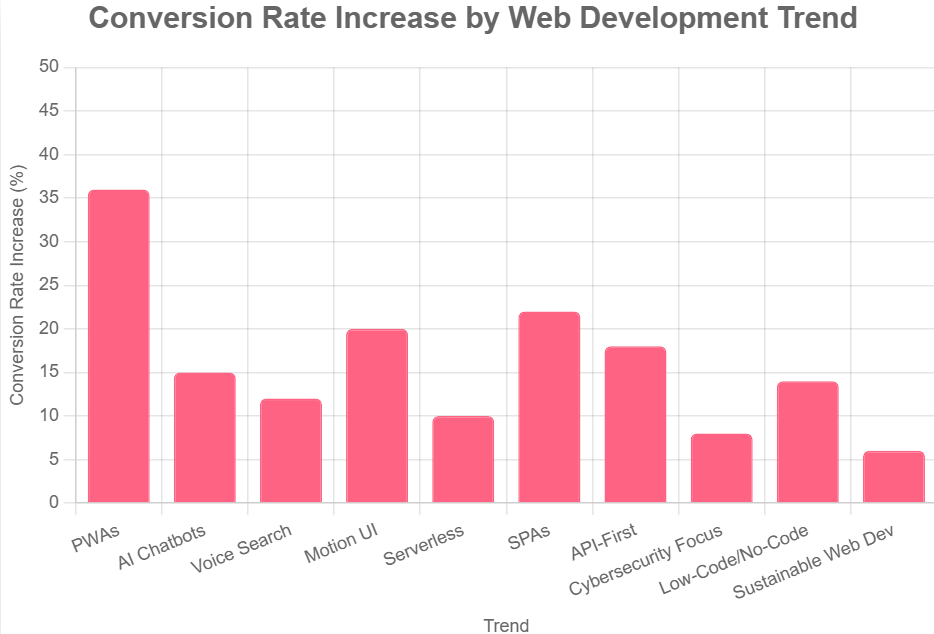
    • PWAs can increase conversion rates by up to 36% (Forrester).

    Actionable Steps

    • Audit your current website for speed and mobile responsiveness.
    • Use frameworks like React, Angular, or js to build PWA features.
    • Implement service workers for offline functionality.
    • Add a web app manifest for installability.

    2. Artificial Intelligence and Chatbots

    The Rise of AI in Web Development

    AI is transforming the way websites engage with their visitors. AI-powered chatbots provide instant support, answer queries, and guide users through the customer journey.

    Key Stats

    • 80% of businesses plan to use chatbots by 2025 (Business Insider).
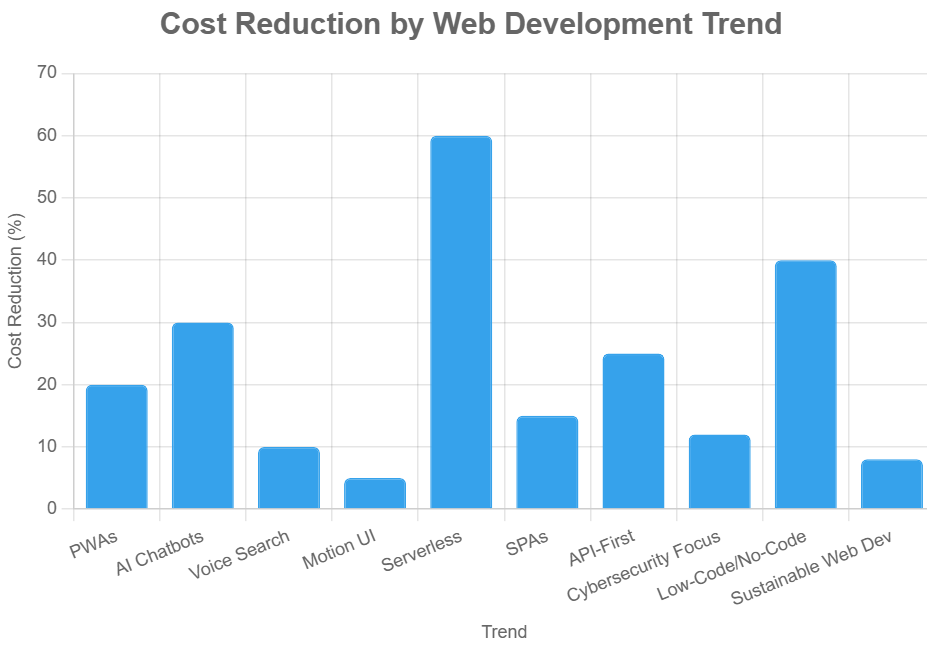
    • AI chatbots can reduce customer service costs by up to 30% (IBM).

    Actionable Steps

    • Integrate AI chatbots using platforms like Dialogflow or Microsoft Bot Framework.
    • Utilize frequently asked questions and customer information to instruct bots for tailored replies.
    • Monitor chatbot performance and update scripts regularly.

    3. Voice Search Optimization

    The Shift to Voice

    As smart speakers and voice assistants become increasingly widespread, it is essential to enhance websites for voice search optimization.  Voice queries are more conversational and often longer than typed searches.

    Key Stats

    • 58% of consumers use voice search to find local business information (Search Engine Watch).
    • By 2025, voice searches are expected to account for 50% of all online searches (Comscore).

    Actionable Steps

    • Use natural language and question-based keywords in content.
    • Optimize for featured snippets and local SEO.
    • Ensure website speed and mobile-friendliness.

    4. Motion UI and Microinteractions

    Enhancing User Engagement

    Motion UI employs animations and transitions to lead users, deliver responses, and craft unforgettable experiences. Microinteractions—small, interactive animations—make websites feel more dynamic and intuitive.

    Key Stats

    • 88% of users are more likely to stay on a site with engaging animations (Adobe).
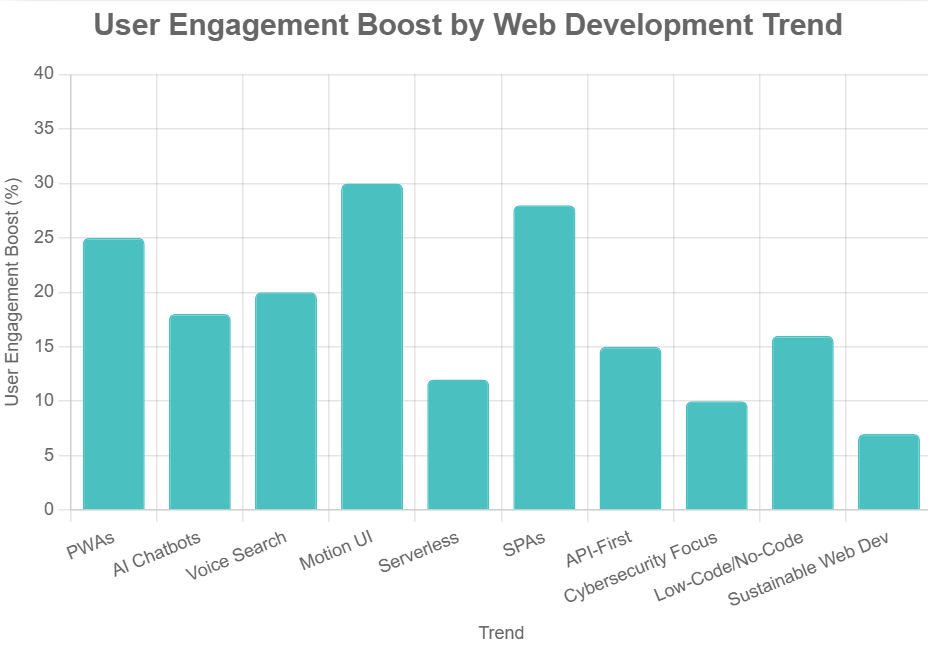
    • Websites with microinteractions see a 20% increase in user engagement (UX Collective).

    Actionable Steps

    • Incorporate subtle animations for buttons, menus, and loading indicators.
    • Use libraries like Framer Motion or GreenSock for advanced effects.
    • Test animations for performance and accessibility.
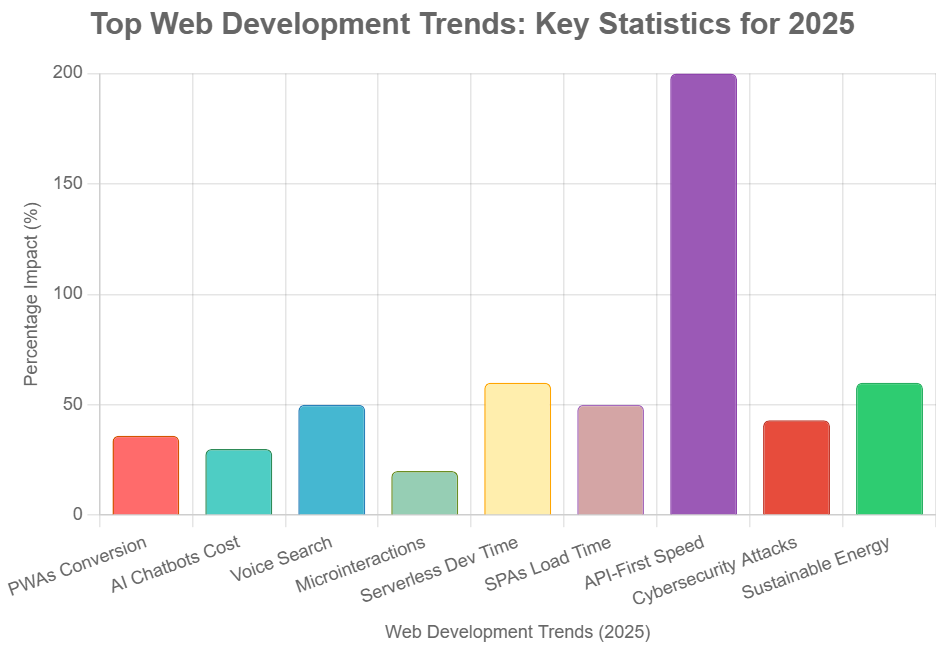
    Bar chart "Top Web Development Trends: Key Statistics for 2025" showing percentage impact of PWAs, AI Chatbots, Voice Search, and more. API-First Speed hits 200%, others range 20-60%, with unique colors.

    5. Serverless Architecture

    What Is Serverless?

    With serverless architecture, applications can be developed and deployed without the burden of server management. Cloud providers handle scaling, maintenance, and security, enabling faster development and reduced costs.

    Key Stats

    • The serverless market is projected to reach $21.1 billion by 2025 (MarketsandMarkets).
    • Companies adopting serverless report a 60% reduction in development time (O’Reilly).

    Actionable Steps

    • Consider adopting serverless technologies such as AWS Lambda, Microsoft Azure Functions, or Google Cloud Functions.
    • Identify parts of your application that can be offloaded to serverless functions.
    • Monitor usage and optimize for cost efficiency.

    6. Single Page Applications (SPAs)

    The SPA Advantage

    Single Page Applications load a single HTML page and dynamically update content as users interact. This approach delivers faster, app-like experiences and reduces server load.

    Key Stats

    • SPAs can improve page load times by up to 50% (Google Developers).
    • 67% of developers prefer SPAs for new projects (Stack Overflow).

    Actionable Steps

    • Use frameworks like React, Angular, or Vue.js to build SPAs.
    • Implement client-side routing for seamless navigation.
    • Optimize for SEO using server-side rendering or pre-rendering.

    7. API-First Development

    Building for Integration

    In API-first development, the focus is on designing strong APIs before constructing the frontend. This approach enables seamless integration with third-party services, mobile apps, and IoT devices.

    Key Stats

    • 83% of web traffic is API-driven (Akamai).
    • Companies using API-first strategies launch products 2x faster (Postman).

    Actionable Steps

    • Design RESTful or GraphQL APIs with clear documentation.
    • Use tools like Swagger or Postman for testing and collaboration.
    • Ensure APIs are secure, scalable, and versioned.
    Person typing on laptop with "Development" workflow (Problem Solving, Analysis, Planning) on screen, desk with charts and water glass.

    8. Cybersecurity and Privacy

    The Security Imperative

    With cyber threats on the rise, robust security measures are non-negotiable. Users expect privacy and data protection as standard.

    Key Stats

    • 43% of cyber attacks target small businesses (Verizon).
    • 85% of consumers won’t do business with a company if they have concerns about its security practices (PwC).

    Actionable Steps

    • Implement SSL certificates and HTTPS.
    • Use secure authentication (OAuth, 2FA).
    • Regularly update software and monitor for vulnerabilities.
    • Comply with privacy regulations like GDPR and CCPA.

    9. Low-Code and No-Code Development

    Democratizing Web Development

    Low-code and no-code platforms empower non-developers to build websites and applications using visual interfaces. This accelerates digital transformation and reduces reliance on specialized talent.

    Key Stats

    • The low-code market is expected to reach $65 billion by 2027 (Forrester).
    • Gartner predicts that by 2025, 70% of new business applications will be built using low-code or no-code platforms.(Gartner).

    Actionable Steps

    • Evaluate platforms like Webflow, Bubble, or Wix for rapid prototyping.
    • Train team members on using visual development tools.
    • Integrate low-code solutions with existing systems via APIs.

    10. Sustainable Web Development

    Building for the Planet

    Eco-friendly web development prioritizes minimizing the ecological footprint of websites. Efficient coding, green hosting, and optimized assets contribute to lower energy consumption.

    Key Stats

    • The internet accounts for 3.7% of global greenhouse emissions (The Shift Project).
    • Optimizing images and code can reduce website energy use by up to 60% (Website Carbon Calculator).

    Actionable Steps

    • Optimize images, videos, and code for faster load times.
    • Choose eco-friendly hosting providers.
    • Minimize third-party scripts and unnecessary plugins.

    Educate users and stakeholders about digital sustainability.

    Visualizing the Trends: Charts and Stats

    Bar chart "Conversion Rate Increase by Web Development Trend" with PWAs at 35%, others 5-25%, pink bars.
    Bar chart "Cost Reduction by Web Development Trend" with Serverless at 60%, others 5-30%, blue bars.
    Bar chart "User Engagement Boost by Web Development Trend" with Serverless at 35%, Motion UI at 30%, others 5-25%, teal bars.

    Action Plan: Implementing the Top Web Development Trends

    1. Assess Current Website:

    Perform a thorough assessment to pinpoint opportunities for enhancement and embrace emerging trends.

    2. Prioritize Trends Based on Business Goals:

    Align trend adoption with strategic objectives such as user engagement, cost reduction, or sustainability.

    3. Develop a Roadmap:

    Create a phased plan to implement selected trends, starting with quick wins and moving to more complex initiatives.

    4. Invest in Training and Tools:

    Upskill teams and invest in the necessary frameworks, platforms, and security measures.

    5. Monitor and Optimize:

    Track performance metrics, gather user feedback, and iterate to maximize the impact of each trend.

    Case Studies: Real-World Impact

    Case Study 1: Retailer Adopts PWAs and AI Chatbots

    A leading online retailer implemented a Progressive Web App and integrated an AI-powered chatbot. The result was a 28% increase in mobile conversions and a 40% reduction in customer service response times.

    Case Study 2: Service Provider Embraces Voice Search and Motion UI

    A local service provider optimized its website for voice search and added microinteractions. Organic traffic grew by 22%, and average session duration increased by 35%.

    Case Study 3: SaaS Startup Goes Serverless and API-First

    A SaaS startup migrated to a serverless architecture and adopted an API-first approach. Development cycles shortened by 50%, and the platform scaled seamlessly during peak demand.

    Frequently Asked Questions

    How can businesses choose which web development trends to adopt?

    Evaluate trends based on business goals, target audience, and available resources. Conduct a comprehensive evaluation to identify areas for improvement and adopt new trends as they arise.

    Are these trends suitable for small businesses?

    Absolutely. Many trends, such as low-code development and PWAs, are accessible and cost-effective for small businesses.

    What is the recommended frequency for updating a website to ensure it remains up-to-date?

    Regular updates are essential. Review and refresh your website at least quarterly, and monitor emerging trends annually.

    What is the biggest risk of ignoring web development trends?

    Falling behind competitors, losing user engagement, and exposing your business to security vulnerabilities.

    Conclusion

    The field of web development is continually evolving, bringing forth fresh trends each year. Staying informed and taking action on these trends is essential for businesses aiming to deliver exceptional digital experiences, drive growth, and maintain a competitive edge. From Progressive Web Apps and AI chatbots to sustainable web development, each trend offers unique opportunities to innovate and connect with users in meaningful ways.

    For expert guidance and tailored web solutions, visit ravens digital. Embrace the future of web development and position your business for long-term success.