
Table of Contents
Key Web Development Trends to Follow
The digital landscape is evolving at an unprecedented pace, and web development stands at the forefront of this transformation. Businesses, entrepreneurs, and developers must stay ahead of the curve to remain competitive and deliver exceptional user experiences. As the backbone of online presence, web development trends shape how brands interact with their audiences, drive conversions, and foster growth. This comprehensive guide delves into the latest web development trends, offering actionable insights and strategies for businesses looking to elevate their digital presence.
The Evolution of Web Development
The evolution of web development has significantly progressed from the initial era of static HTML websites. Today, it encompasses a wide array of technologies, frameworks, and methodologies that enable the creation of dynamic, interactive, and responsive websites. The progression of web development is fueled by shifting user demands, advancements in technology, and the necessity for smooth digital interactions.
Key Milestones in Web Development
- Static Websites (1990s): Simple HTML pages with minimal interactivity.
- Dynamic Websites (2000s): Introduction of server-side scripting (PHP, ASP.NET) and databases.
- Responsive Design (2010s): Mobile-first approach and CSS frameworks like Bootstrap.
- Modern Web Apps (2020s): Progressive Web Apps (PWAs), Single Page Applications (SPAs), and headless CMS.
Current Web Development Trends
Keeping abreast of the newest trends is essential for companies that strive to deliver meaningful digital experiences. Below are the most significant web development trends shaping the industry in 2024 and beyond.
1. The Rise of Progressive Web Apps: Bridging Websites and Mobile Apps
PWAs combine the best of web and mobile applications, offering offline capabilities, push notifications, and fast load times. They provide a native app-like experience directly from the browser, making them a popular choice for businesses seeking to enhance user engagement.
Benefits of PWAs:
- Improved performance and reliability
- Enhanced user engagement
- Lower development and maintenance costs
2. Seamless Browsing with Single-Page Applications
SPAs load a single HTML page and dynamically update content as users interact with the app. This approach results in faster load times and a smoother user experience, which is essential for retaining visitors and reducing bounce rates.
Popular SPA Frameworks:
- React.js
- Angular
- Vue.js
3. The Shift Toward Serverless Computing
Serverless computing allows developers to build and run applications without managing server infrastructure. This trend reduces operational complexity, lowers costs, and enables rapid scaling.
Key Advantages:
- Automatic scaling
- Reduced server management
- Cost efficiency
4. Smarter Websites with AI and Chatbots
AI and ML are transforming web development by enabling personalized experiences, chatbots, and advanced analytics. Integrating AI-driven features can help businesses automate tasks, improve customer service, and gain valuable insights.
Applications of AI in Web Development:
- Chatbots and virtual assistants
- Personalized content recommendations
Predictive analytics

5. Designing for Voice Search and Conversational Queries
As smart speakers and voice assistants gain popularity, enhancing websites for voice search is becoming more essential. Voice search requires a focus on natural language processing, conversational keywords, and structured data.
Voice Search Optimization Strategies:
- Use of long-tail keywords
- Implementation of schema markup
- Creation of FAQ sections
6. Bringing Websites to Life with Motion and Interactivity
Motion UI and microinteractions enhance user engagement by providing visual feedback and guiding users through the website. SDelicate animations, seamless transitions, and engaging interactive features enhance the overall user experience, making it feel more immersive.
Examples of Microinteractions:
- Button hover effects
- Loading animations
- Interactive form validations
7. Building Flexible Platforms with API-First Development
API-first development prioritizes the creation of robust APIs before building the frontend or backend. This approach enables seamless integration with third-party services and supports omnichannel experiences.
Benefits of API-First Development:
- Faster development cycles
- Improved scalability
- Enhanced flexibility
8. Why Website Security Is More Important Than Ever
As cyber threats become more sophisticated, prioritizing cybersecurity and data privacy is essential. Implementing secure coding practices, SSL certificates, and GDPR compliance measures protects user data and builds trust.
Key Security Measures:
- HTTPS encryption
- Regular security audits
- Multi-factor authentication
Visualizing Web Development Trends
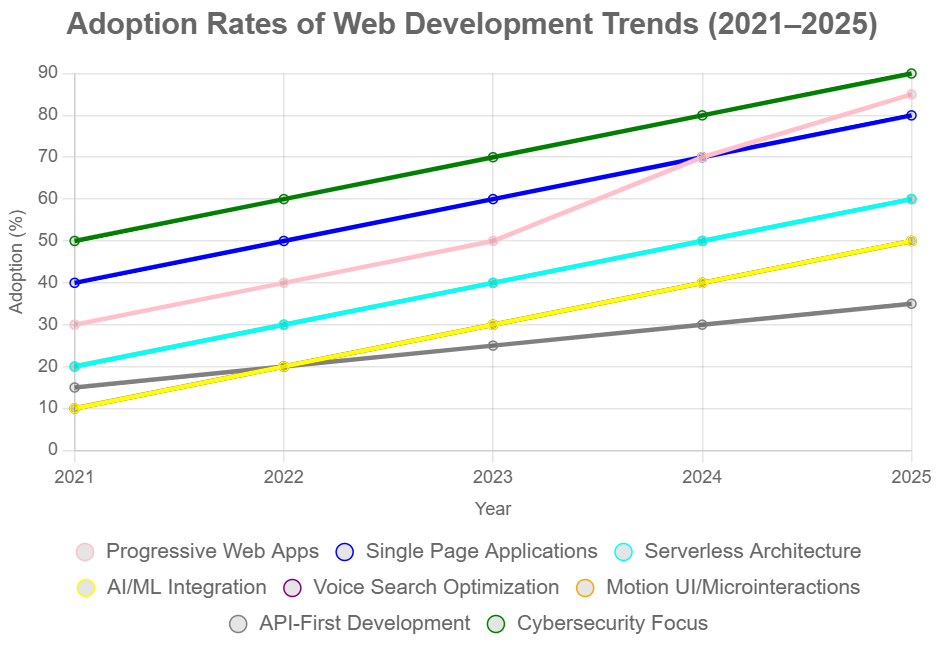
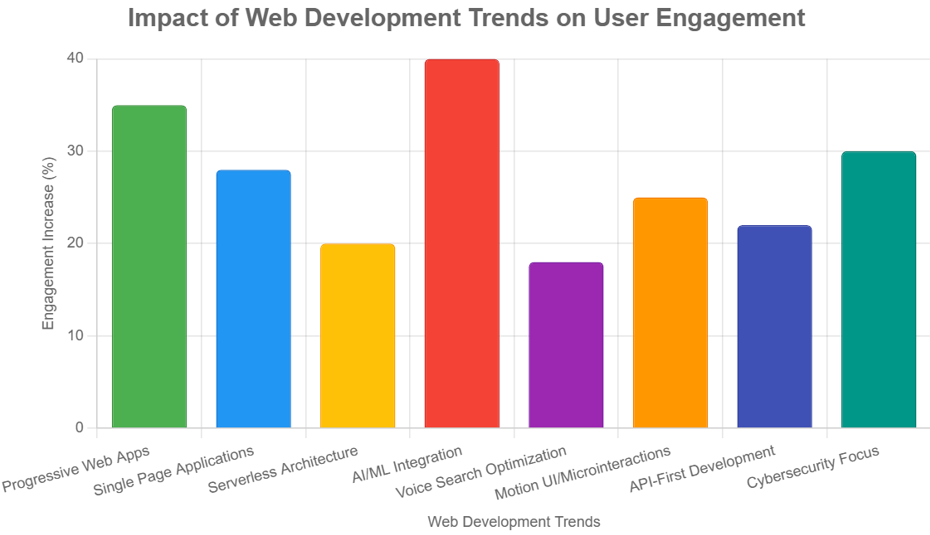
Below are visual representations of the adoption rates and impact of key web development trends.
Adoption Rates of Web Development Trends (2021-2025)
Impact of Web Development Trends on User Engagement
Implementing Web Development Trends for Business Growth
Adopting the latest web development trends can significantly impact business growth, customer satisfaction, and brand reputation. Here are actionable steps for integrating these trends into a digital strategy.
1. Assess Current Website Performance
Begin by evaluating the current website’s performance, user experience, and security. Identify areas that require improvement and prioritize updates based on business goals.
2. Prioritize Mobile-First and Responsive Design
With the majority of users accessing websites via mobile devices, ensuring a mobile-first and responsive design is non-negotiable. Make use of frameworks such as Bootstrap or Tailwind CSS to enhance and expedite the development process.
3. Integrate Progressive Web App Features
Enhance the website with PWA features such as offline access, push notifications, and fast loading times. This not only improves user engagement but also boosts SEO rankings.
4. Leverage AI and Automation
Implement AI-powered chatbots for customer support, personalized content recommendations, and predictive analytics to gain insights into user behavior.
5. Optimize for Voice Search
Update website content to include conversational keywords, structured data, and FAQ sections to capture voice search traffic.
6. Enhance Security Measures
Regularly update software, implement SSL certificates, and conduct security audits to protect user data and maintain compliance with regulations.
7. Adopt API-First Development
Develop robust APIs to enable seamless integration with third-party services, mobile apps, and other digital platforms.
8. Focus on Accessibility
Ensure the website is accessible to all users, including those with disabilities. Adhere to WCAG standards and implement semantic HTML to enhance accessibility.
Case Studies: Successful Adoption of Web Development Trends
Case Study 1: E-Commerce Brand Implements PWA
An e-commerce brand transitioned its website to a Progressive Web App, resulting in a 40% increase in mobile conversions and a 30% reduction in bounce rates. The ability to function offline, along with push notifications, ensured that users remained involved, even during periods of unreliable connectivity.
Case Study 2: SaaS Company Leverages AI Chatbots
A SaaS company integrated AI-powered chatbots to handle customer inquiries, reducing response times by 60% and increasing customer satisfaction scores. The chatbots also provided personalized product recommendations, boosting upsell opportunities.
Case Study 3: Local Business Optimizes for Voice Search
A local service provider optimized its website for voice search, leading to a 25% increase in organic traffic from voice-enabled devices. The addition of FAQ sections and schema markup improved visibility in voice search results.
Future Outlook: What’s Next in Web Development?
The future of web development promises even more innovation, with emerging technologies set to redefine digital experiences.
1. WebAssembly (Wasm)
WebAssembly enables high-performance applications to run in the browser, opening the door for complex games, video editing, and other resource-intensive tasks.
2. Augmented Reality (AR) and Virtual Reality (VR)
AR and VR are poised to revolutionize web experiences, particularly in e-commerce, education, and entertainment. Interactive 3D models and immersive environments will become more prevalent.
3. Blockchain Integration
Blockchain technology offers enhanced security, transparency, and decentralized applications. Its integration into web development will impact industries such as finance, supply chain, and healthcare.
4. Low-Code and No-Code Platforms
Low-code and no-code platforms empower non-developers to create and manage websites, accelerating digital transformation and reducing development costs.
Conclusion
Web development is an ever-evolving domain that consistently adjusts to new technological innovations and the shifting needs of users. By embracing the latest trends—such as Progressive Web Apps, AI integration, server less architecture, and voice search optimization—businesses can create engaging, secure, and high-performing websites that drive growth and foster customer loyalty.
For organizations seeking to stay ahead in the digital landscape, partnering with a forward-thinking web development agency is essential. Ravens Digital specializes in leveraging cutting-edge technologies to deliver tailored web solutions that meet the unique needs of each client. Explore more at ravensdigital.com and take the next step toward digital excellence.
Frequently Asked Questions
What are the most important web development trends in 2024?
Key trends include Progressive Web Apps, Single Page Applications, serverless architecture, AI integration, voice search optimization, motion UI, API-first development, and enhanced cybersecurity.
How can businesses benefit from adopting these trends?
Adopting modern web development trends leads to improved user engagement, higher conversion rates, better security, and a competitive edge in the digital marketplace.
What is the ideal frequency for updating a website to remain aligned with current trends?
Websites should be reviewed and updated at least annually to incorporate new technologies, improve performance, and address security vulnerabilities.
Get Started with Ravens Digital
Ready to transform your digital presence? Contact Ravens Digital for a consultation and discover how the latest web development trends can elevate your business. Visit ravensdigital.com for more information.
Leave a Reply