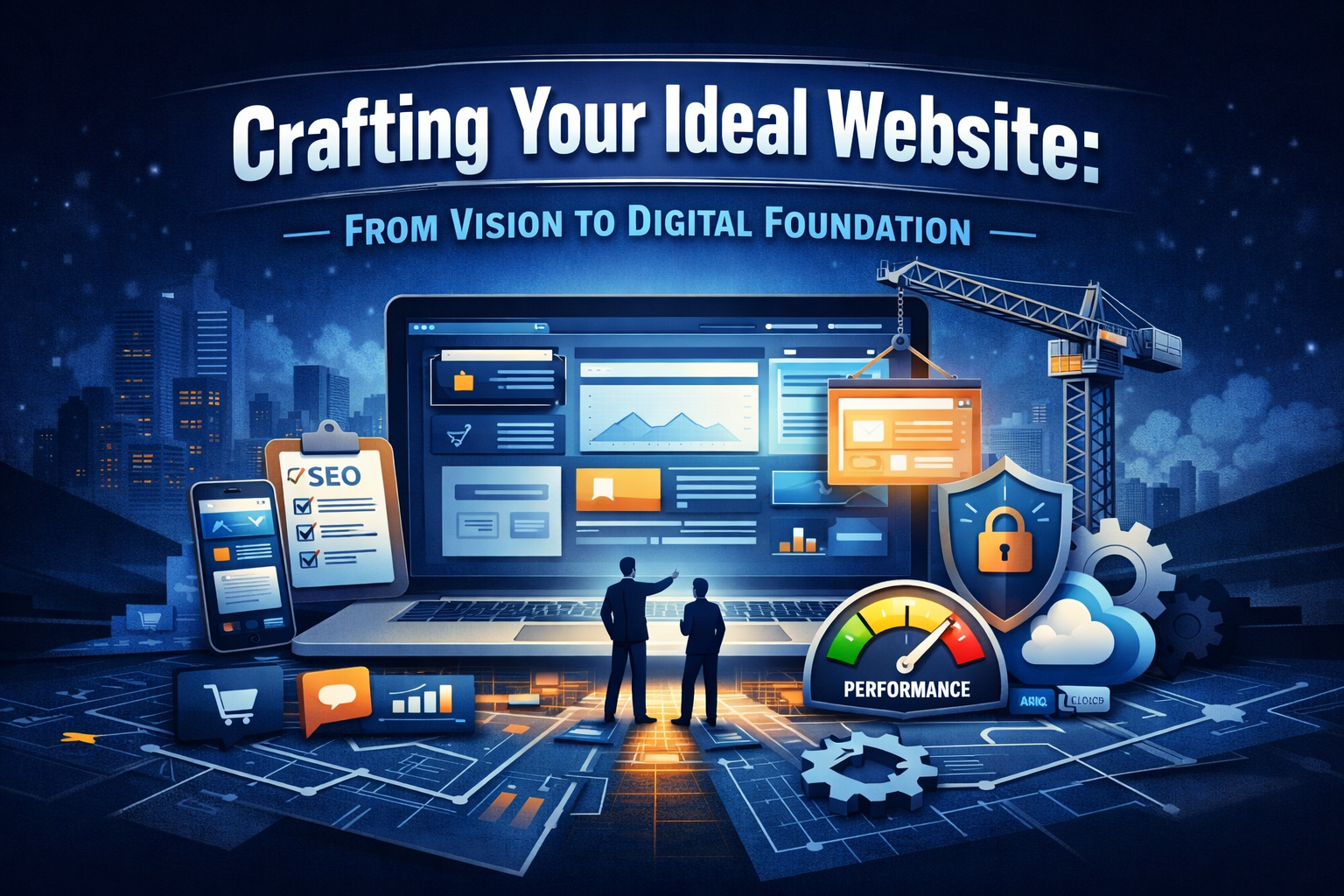
Selecting the appropriate website type is a pivotal step in your online presence journey—but it marks just the beginning. The real power of a website lies not solely in its classification (corporate site, e-commerce store, portfolio, or custom application) but in the precision of its planning, construction, and alignment with your broader goals.
A site that lacks strategic design may appear visually appealing yet fall short in driving results. Conversely, one developed without scalability in mind might operate effectively today but crumble as your business expands. This comprehensive guide dissects the full lifecycle of building a website that not only meets current needs but evolves with your ambitions. It’s tailored for entrepreneurs and leaders ready to transform their digital vision into a high-performing, adaptable tool for growth.
Why Execution Outweighs the Website Type
Many organizations spend excessive time debating whether to launch an e-commerce platform, a content-heavy site, or a custom solution, while undervaluing the methodology behind the build. In reality, two identical website types can yield vastly different outcomes based on their construction quality.
A poorly constructed website often faces:
- High bounce rates and shallow user engagement
- Diminished visibility in search results
- Lagging load speeds that frustrate visitors
- Security loopholes inviting breaches
- Inflexibility to grow or adapt to new features
- Persistent technical debt and rising maintenance costs
Conversely, a well-built website:
- Instantly establishes credibility and trust
- Drives users toward desired actions (purchases, sign-ups, inquiries)
- Amplifies marketing and sales initiatives
- Adapts seamlessly to business expansion
- Lowers ongoing costs through efficiency and reliability
A deliberate approach to website development ensures your digital platform aligns with—and accelerates—your strategic goals, rather than becoming an operational burden.
Step 1: Clarifying Purpose Before the First Line of Code
Every website must start with a clear, mission-driven blueprint. Without defined objectives, design and development choices become guesswork, leading to misaligned outcomes.
Defining the Core Purpose
Ask:
- Is this site primarily for lead generation?
- Does it need to facilitate direct sales?
- Will it focus on education or content delivery?
- Will it serve as a functional hub for users or clients?
Each purpose demands unique architectural choices, user flow designs, and feature sets.
Aligning Goals with Business Strategy
Your website should act as a force multiplier for:
- Generating revenue through conversions
- Strengthening brand authority and recognition
- Fueling customer acquisition and retention
- Streamlining internal operations
Without alignment, websites often become cluttered, directionless, and ineffective.
Establishing Measurable Success
Define KPIs upfront:
- Conversion rate thresholds
- Engagement metrics (time on site, page views)
- Revenue or lead volume targets
- Retention rates and user satisfaction scores
Clear metrics ensure every decision—from layout to code—is evaluated against its contribution to business success.
Step 2: Selecting the Optimal Technology Stack
The technology foundation you choose directly impacts scalability, performance, and long-term viability. Avoid outdated frameworks or unnecessarily complex systems that could hinder growth.
Common Technology Pathways
- CMS platforms (e.g., WordPress, Drupal) for content-centric sites
- E-commerce solutions (e.g., Shopify, Magento) for product-focused stores
- Custom frameworks (e.g., React, Node.js) for unique applications
- Headless architecture for multi-channel delivery (e.g., web, mobile, IoT)
Matching Tools to Needs
Evaluate technology based on:
- Anticipated traffic and scalability demands
- Functional requirements (e.g., user accounts, APIs)
- Integration capabilities with existing tools
- Financial and resource constraints
A boutique business might thrive with a simple CMS, while a scaling SaaS platform requires a modular, API-driven stack.
Building for the Future
Opt for technologies that:
- Allow effortless addition of new features
- Handle traffic spikes without latency
- Support seamless integration with emerging tools
- Enable updates without site downtime
A forward-thinking stack prevents costly rebuilds as your business grows.
Step 3: Prioritizing User-Centric Design
Design should serve dual roles: aesthetic appeal and intuitive navigation. A visually stunning site means little if users struggle to find value.
User Experience (UX) Essentials
Implement:
- Intuitive navigation with clear pathways
- Logical content hierarchy (CTAs, key info, secondary details)
- Seamless interactions (mobile-first, touch-friendly elements)
- Minimal cognitive load—users should never “guess” how to proceed
User Interface (UI) Best Practices
- Maintain brand consistency in colors, fonts, and visuals
- Prioritize readability with ample white space and legible fonts
- Ensure accessibility for all users (screen readers, keyboard navigation)
- Avoid overloading with animations or distractions
Guide Users to Action
Design should:
- Communicate professionalism and reliability
- Reduce friction at critical decision points (e.g., checkout, contact forms)
- Reinforce credibility through testimonials or security badges
Every visual element should align with your goal of guiding users smoothly from curiosity to conversion.
Step 5: Engineering for Performance and Longevity
Development Best Practices
-
Write clean, well-documented code for easier maintenance
-
Adopt modular architecture to enable independent feature updates
-
Optimize assets (images, scripts) for fast loading times
-
Ensure cross-browser compatibility and responsiveness
Future-Proofing Through Design
Scalable development considers:
-
Room for feature additions (e.g., live chat, analytics tools)
-
Handling growing traffic through optimized servers or CDNs
-
Integration with emerging tools (e.g., AI chatbots, payment gateways)
Websites built with rigidity in mind often require complete overhauls as your business evolves. Prioritize flexibility to avoid redundant investments.
Step 6: Prioritize Speed and Performance
The Impact of Speed on User Behavior
A slow-loading website can significantly undermine your efforts by leading to:
-
Increased user drop-off (bounce rates)
-
Weakened credibility and trust
-
Lower rankings in search engine results
-
Missed conversion opportunities and revenue loss
Today’s users demand instant access, no matter the device or internet speed. Delivering a fast, smooth experience is non-negotiable.
Core Areas for Performance Enhancement
To ensure optimal speed and responsiveness, focus on:
-
Compressing and optimizing visual content
-
Implementing lazy loading for images and scripts
-
Streamlining code through minification of CSS and JavaScript
-
Tuning server settings for faster response times
-
Leveraging global content delivery networks (CDNs)
Performance should be woven into every phase of development—not tacked on at the end.
Step 7: Design for Every Device – Mobile-First, Always
Adopting a Mobile-First Mindset
Designing starting from mobile ensures:
-
Superior usability on smaller displays
-
Faster loading due to streamlined assets
-
Greater accessibility for diverse users
-
Higher engagement and interaction rates
Ensuring Cross-Device Consistency
Your website must function flawlessly across:
-
Smartphones
-
Tablets
-
Laptops
-
Desktop computers
Even minor glitches on mobile can result in users abandoning your site immediately.
Step 8: Build Security Into Your Foundation
Critical Security Practices
Implement these safeguards from day one:
-
Secure connections via HTTPS and SSL certificates
-
Safe handling of user-submitted forms
-
End-to-end data encryption
-
Defense mechanisms against common threats (e.g., XSS, CSRF)
-
Ongoing software updates and vulnerability patching
The Real-World Cost of Neglecting Security
Failure to protect your site can lead to:
-
Permanent damage to brand reputation
-
Loss of sensitive customer data
-
Legal liabilities and fines
-
Erosion of user confidence
Security must be proactive, not reactive—integrated from the initial design stages.
Step 9: Connect Systems for Smarter Operations
Key Integrations to Consider
Connect your site with:
-
Customer Relationship Management (CRM) tools
-
Marketing automation platforms
-
Secure payment processing systems
-
Advanced analytics services
-
Email marketing solutions
-
Third-party APIs for extended functionality
Why Integrations Are Game-Changers
When done right, they:
-
Boost operational efficiency
-
Provide deeper customer insights
-
Automate repetitive tasks
-
Deliver a more personalized user journey
Careful implementation is key—poorly built integrations can compromise both speed and security.
Step 10: Test Rigorously Before Going Live
Essential Testing Phases
Ensure your site passes comprehensive checks for:
-
Feature functionality and accuracy
-
Load time and stress performance
-
Compatibility across browsers and devices
-
Vulnerability scanning and data protection
-
Smooth navigation and user journey flow
The Risks of Skipping QA
Premature launches risk:
-
Broken links or non-functional elements
-
Lost sales and missed leads
-
Negative user impressions that are hard to reverse
A methodical quality assurance process sets the stage for a successful, glitch-free launch.
Step 11: Evolve Beyond Launch – Continuous Improvement
Post-Launch Priorities
Stay ahead by:
-
Tracking key performance indicators (KPIs)
-
Refining conversion pathways
-
Regularly refreshing content
-
Iteratively improving features
-
Responding to real user feedback
Why Ongoing Optimization Matters
User expectations shift, markets evolve, and technology advances. Continuous refinement keeps your site effective, competitive, and future-ready.
Top Website Development Pitfalls to Avoid
Steer clear of these common missteps:
-
Selecting flashy tech trends over practical needs
-
Overlooking mobile performance and usability
-
Cluttering the site with unused or redundant features
-
Delaying or skipping performance tuning
-
Underestimating security requirements
-
Failing to plan for scalability
Avoiding these traps saves resources and ensures long-term success.
Your Website as a Strategic Business Investment
A thoughtfully built website:
-
Amplifies marketing and sales initiatives
-
Builds brand authority and professionalism
-
Converts visitors into paying customers
-
Scales as your company expands
-
Simplifies customer and operational workflows
Treat your website not as a one-time expense, but as an evolving asset that delivers lasting ROI.
Why Ravens Digital Delivers More Than Just a Website
Creating a high-impact online presence takes more than coding—it requires strategy, foresight, and deep expertise.
At Ravens Digital, we focus on:
-
Aligning digital architecture with your business objectives
-
Engineering fast, scalable, and robust solutions
-
Crafting intuitive, human-centered experiences
-
Embedding security, reliability, and adaptability into every build
We don’t just deliver websites—we build digital foundations that drive growth, inspire trust, and deliver measurable outcomes.
Final Insight: Build for the Future
Choosing the right type of website is important, but how you build it is what truly determines success.
When executed with clarity, planning, and precision, your website becomes more than a digital brochure—it transforms into a dynamic engine for engagement, credibility, and revenue.
With the right strategy—and the right partner—your website can become a cornerstone of sustainable business growth.
Leave a Reply