
Table of Contents
Backend Development: The Ultimate Beginner’s Guide
In the digital era, websites, apps, and platforms have become essential tools for businesses and consumers alike. But while the visuals and interfaces catch the eye, it’s the backend that powers everything behind the scenes — from storing user data to processing transactions, managing content, and ensuring your site works flawlessly.
So, what exactly is backend development, and why does it matter?
Whether you’re a startup founder, business owner, marketer, or aspiring developer, this in-depth guide — brought to you by the experts at Ravens Digital — will walk you through everything you need to know about backend development, how it works, the technologies involved, and why it’s absolutely essential to your digital success.
What Is Backend Development?
It refers to the server-side of a website or application. It’s the behind-the-scenes system that handles logic, databases, user authentication, server configuration, and integrations — everything users don’t directly see but rely on every time they use a digital product.
Imagine an online store. While the frontend shows products and allows you to click “Buy Now,” it’s the backend that:
- Stores the product information
- Calculates taxes and shipping
- Processes your payment
- Sends confirmation emails
- Updates inventory
Without a properly built backend, websites and applications are just pretty interfaces with no functionality.
Why Backend Development Matters for Your Website or App
Backend development isn’t just technical jargon. It directly affects your business goals and customer experience.
Here’s why the backend is critical:
- Performance: A fast, scalable backend keeps your site loading quickly — vital for both UX and SEO.
- Security: User data, transactions, and login systems rely on secure backend architecture.
- Functionality: From contact forms to user accounts and APIs, all interactive features depend on backend logic.
- Data Management: Your backend communicates with databases, organizing everything from blog content to product catalogs.
- Integration: CRMs, payment gateways, marketing tools — your backend handles it all.
At Ravens Digital, we engineer backend systems that are fast, secure, and tailored to your business’s unique needs — ensuring your digital presence doesn’t just look good, but works flawlessly.
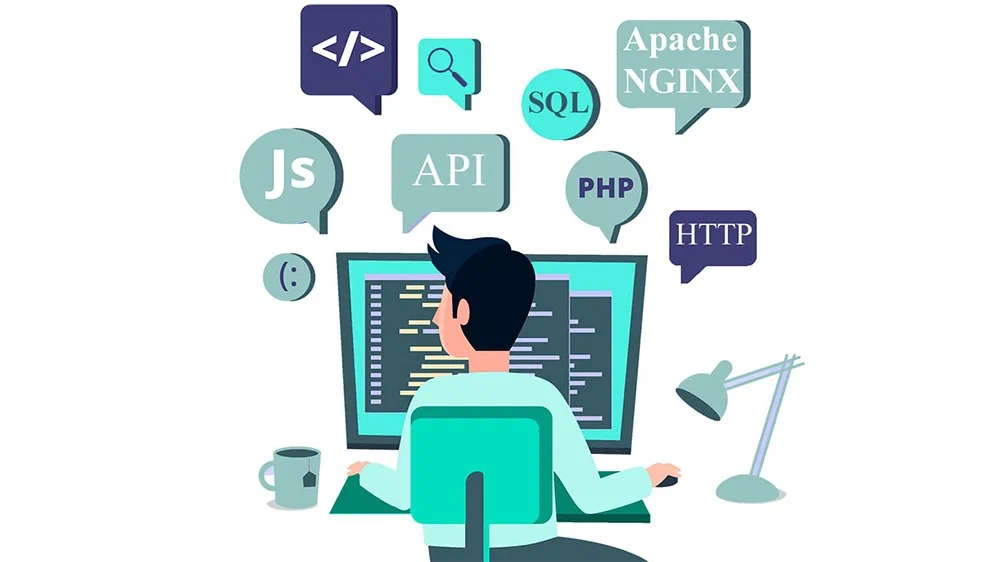
Frontend vs Backend: What’s the Difference?
Before diving deeper, let’s clarify the distinction between frontend development and backend development:
Feature | Frontend (Client-Side) | Backend (Server-Side) |
What it does | Controls the visual layout and user interface | Handles logic, databases, authentication, server calls |
Languages used | HTML, CSS, JavaScript | PHP, Python, Node.js, Ruby, Java |
Runs on | User’s browser | Web server |
Example features | Buttons, menus, images, responsive design | Login systems, content management, APIs, checkout |
Tools | React, Vue, Tailwind, Bootstrap | Express, Django, Laravel, MySQL, MongoDB |
Simply put: frontend is the face, and backend is the brain.
The Three Pillars of Backend Development
Backend systems are typically built on three core components:
1. Server
A server is a machine or cloud service that hosts your website or app, processing user requests and delivering data.
- Example: When a user submits a login form, the server validates their credentials.
- Tools: Apache, NGINX, AWS, DigitalOcean
2. Database
The database stores your application’s data — such as user profiles, product information, blog posts, or orders.
Types:
- Relational (SQL): MySQL, PostgreSQL
- Non-relational (NoSQL): MongoDB, Firebase
3. Application (Logic Layer)
This is where the business logic resides — the actual code that tells the application what to do with incoming data or requests.
- It receives inputs, processes them, interacts with the database, and sends responses.
- Examples: Calculating cart totals, validating passwords, returning search results
Key Technologies Used in Backend Development
Backend development requires mastery of several technologies. Here’s a breakdown of the most important ones:
A. Programming Languages
These are the building blocks for writing backend code:
- PHP: Popular for WordPress and Drupal, known for its easy deployment.
- Python: Clean syntax; used with Django, Flask
- js: JavaScript-based; ideal for real-time apps
- Ruby: Used with Rails framework for rapid development
- Java: Robust and enterprise-grade
B. Backend Frameworks
Frameworks streamline development by providing pre-written code, structure, and tools.
- js (Node.js)
- Django (Python)
- Flask (Python)
- Laravel (PHP)
- Ruby on Rails
Each framework is suited for different types of projects and developer preferences.
C. Databases
Backend systems often require both relational and non-relational databases depending on data structure needs.
- SQL: Structured data — MySQL, PostgreSQL
- NoSQL: Flexible data — MongoDB, CouchDB
D. APIs (Application Programming Interfaces)
APIs allow your backend to communicate with other applications or services, such as:
- Payment gateways (Stripe, PayPal)
- Email marketing tools (Mailchimp)
- Third-party CRMs or ERPs
- Social logins (Google, Facebook)
RESTful APIs and GraphQL are common methods used to expose backend functionality.
How Backend Development Works (Step-by-Step)
Here’s a simplified version of the backend development lifecycle:
Step 1: Planning the Architecture
- Define the site’s structure and backend requirements
- Choose languages, frameworks, and database types
- Plan endpoints, routes, and server logic
Step 2: Building the Server
- Set up a web server (local or cloud-based)
- Configure environments (development, testing, production)
Step 3: Writing Application Logic
- Develop code that handles user requests
- Connect business logic with frontend requests
- Write controllers, services, and utilities
Step 4: Creating & Managing the Database
- Define data models and relationships
- Write CRUD operations (Create, Read, Update, Delete)
- Test data input and retrieval
Step 5: API Development & Integration
- Build REST or GraphQL APIs
- Connect to third-party platforms
- Ensure secure data transfer with tokens, keys, or OAuth
Step 6: Testing & Optimization
- Conduct unit, integration, and load testing
- Monitor performance
- Optimize queries and response times
Step 7: Deployment
- Push code to production servers
- Monitor errors and logs
- Ensure backups and updates are in place
The Role of a Backend Developer
Backend developers specialize in creating a web application’s server-side logic.
Their responsibilities include:
- Writing clean, efficient, and secure code
- Designing and maintaining databases
- Creating APIs and integrations
- Managing hosting and deployment
- Testing and debugging
- Optimizing for performance and scalability
Backend developers often work closely with frontend teams, UI/UX designers, and DevOps professionals.

Security in Backend Development
Security is non-negotiable in backend systems. A small vulnerability can lead to data breaches, lawsuits, or loss of user trust.
Key backend security practices include:
- Encryption of sensitive data
- Authentication & Authorization (JWT, OAuth, session management)
- Robust input validation against SQL injection and XSS.
- Rate limiting to protect against brute-force attacks
- Regular updates to frameworks and dependencies
- HTTPS for encrypted connections
At Ravens Digital, our backend engineers follow secure coding best practices and conduct regular audits to ensure your platform stays safe and reliable.
How Backend Development Impacts SEO & Performance
While SEO is often associated with frontend elements, the backend plays a critical role:
- Page Speed: Fast server responses boost Core Web Vitals
- Mobile Optimization: Lightweight APIs improve mobile performance
- Indexability: Properly structured URLs and redirects
- Schema Implementation: Often managed through backend logic
- Content Management: Dynamic content delivery via databases
Backend development lays the foundation for a fast, discoverable, and scalable site.
Common Backend Development Challenges
Backend development can be complex. Here are some of the biggest challenges:
- Scalability: Can your system handle 10x the traffic tomorrow?
- Data consistency: How do you manage changes across multiple databases?
- Downtime: How do you ensure 99.9% uptime?
- Security threats: How do you stay ahead of hackers?
- Third-party integration failures: What happens when a payment API goes down?
That’s why working with an experienced team — like Ravens Digital — makes a difference. We build resilient, maintainable backend systems that grow with your business.
Why Ravens Digital Delivers Industry-Leading Backend Solutions
At Ravens Digital, we don’t just build websites — we architect performance-driven digital systems. Here’s what sets us apart:
✅ Custom-Tailored Backend Solutions
We build unique backends suited to your business model — no generic templates.
✅ Secure and Scalable Architecture
Our code is clean, auditable, and future-ready. We ensure your platform grows as your audience expands.
✅ Seamless Frontend Integration
We align backend functionality with elegant frontend interfaces for a seamless user experience.
✅ Advanced CMS & API Integration
Need to manage content or connect to tools? We can build or extend CMS platforms with advanced backend logic.
✅ Performance Optimization & Monitoring
We monitor server load, speed, and uptime — continuously optimizing for better performance.
Whether you need a custom portal, eCommerce platform, CRM integration, or content management system, we’ve got the expertise to deliver.
Conclusion:
Backend development is the unsung hero of every successful website and application. It’s what powers user experiences, ensures security, supports integrations, and scales with growth.
If you’re serious about digital transformation, backend development isn’t just a tech choice — it’s a business decision.
At Ravens Digital, we specialize in backend development that aligns with your goals — whether you’re launching a product, expanding your reach, or optimizing your performance.
Leave a Reply